Driftless Area
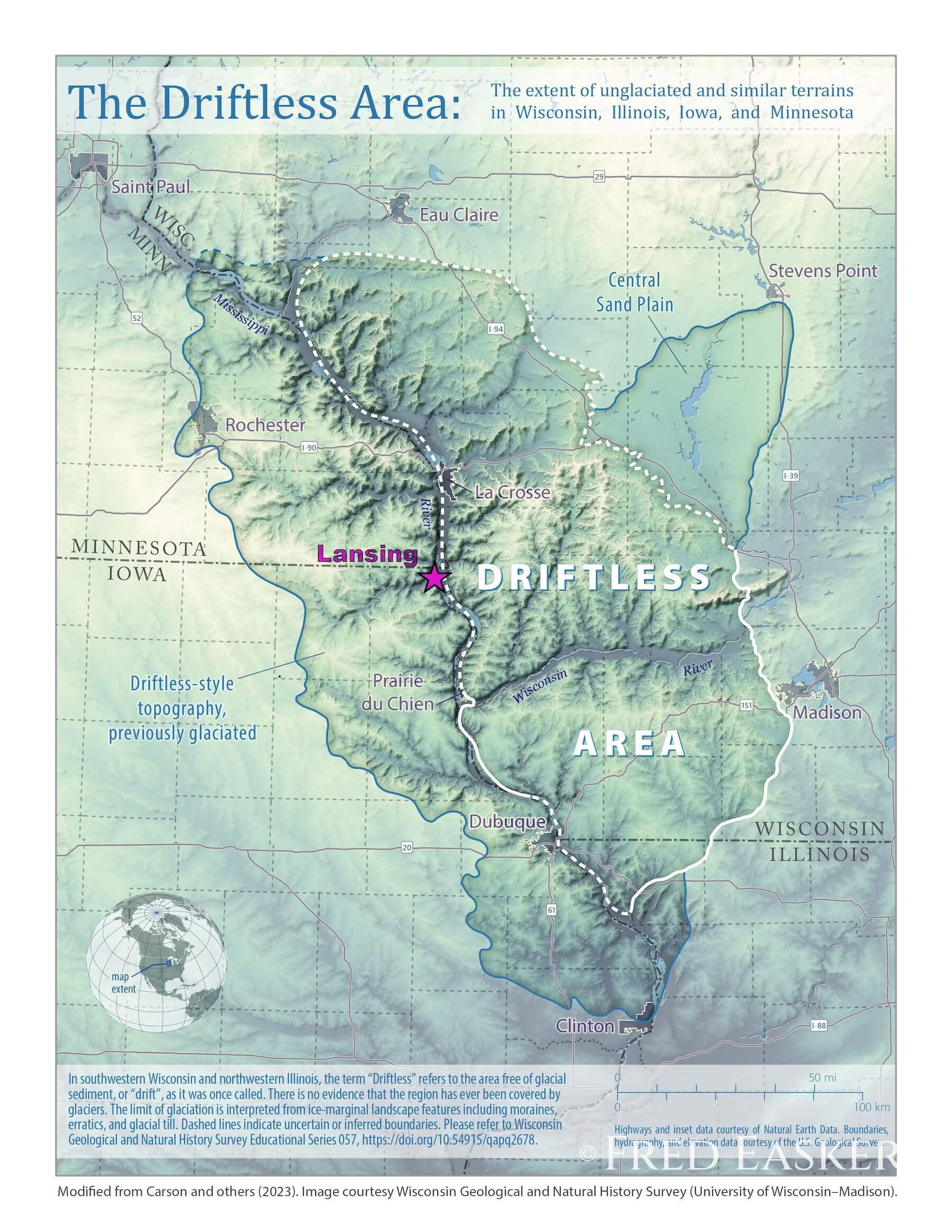
Along the northeastern Iowa border, the Mississippi River cuts through the Driftless Area—an ancient landscape of deeply carved valleys untouched by glacial drift. Spanning northeastern Iowa, southeastern Minnesota, southwestern Wisconsin, and northwestern Illinois, the region retains a primal character shaped by limestone bluffs, quiet sloughs, and centuries of human and natural history. Despite modern engineering and commerce along the river, the Driftless remains a place where the land still dominates.
Close to the water the area still feels primal despite having been brought to heel in the 1930’s with the building of a massive lock and dam system that impeded the river and created vast pools and quiet sloughs. Hundreds of species of wildlife call this corridor home, and each year thousands of birds continue to follow the river as a flyway, as they have for centuries. Meanwhile, the recreational craft of all sorts dodge the enormous barges filled with grain and coal, reminders that the river remains both a sheltering habitat and a working river.
Centuries before the earliest European explorers found and used the Mississippi to establish trade routes that evolved into major transportation systems, the river supported indigenous populations. Their ancient burial mounds in the shapes of bears, fish, and falcons are scattered on the tops of the tree-covered limestone bluffs 400 and more feet above the water.
Near the middle of the Driftless Area, on the Iowa bank of the river, is the small town of Lansing. In 2015 we opened our part-time studio and gallery on Main Street. The town has little in the way of an artistic legacy, apart from a curious footnote: in 1851 the 19th-century sculptor Harriet Hosmer climbed the bluff that towers 450 feet above Lansing and somehow managed to have it named after her. Today, Mt. Hosmer Park offers distant, awe-inspiring views of the river valley in three directions.
The best part of the two-and-a-half-hour drive from Cedar Rapids to Lansing is the 35-mile stretch along Highway 35 north from Prairie du Chien, Wisconsin, where inspiring and nearly continuous views of the Mississippi unfold. Never the same from one trip to the next, the river can appear cerulean blue and pale gold edged with winter ice, or choppy and maroon under summer winds. The tree-covered bluffs on either side have been compared to a herd of giant buffalo, sometimes perfectly reflected in the still surface of the pools. On certain mornings in spring and fall, those great beasts dissolve into fog, their humps barely visible. Each time, it feels like a new place.
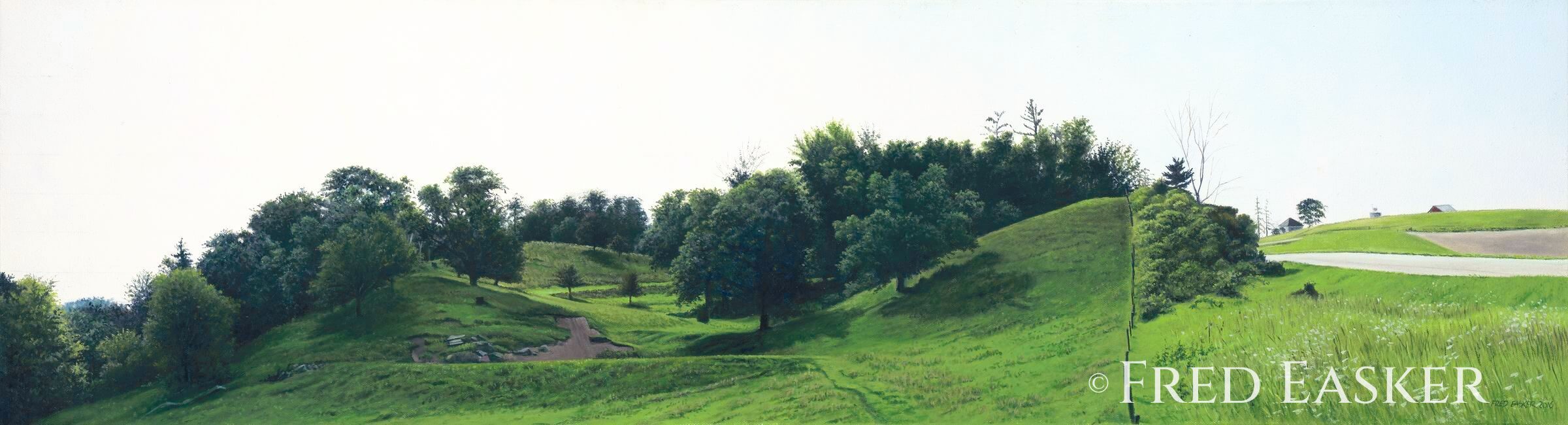
With a kind of theological reverence, 19th-century American landscape painters celebrated the Hudson River even as they acknowledged the marks of human encroachment. I view the Mississippi River and the Driftless Area in much the same way. Despite power boats and barges, mile-long trains racing the riverbanks, expensive homes clinging to the bluffs, and modern agricultural practices pressing in from the edges, the place remains deeply spiritual. Here, natural beauty still overwhelms everything else.